
Turn Unstructured TextInto AI-Ready Data
Transform raw text, documents, conversations, and customer feedback into structured training data for NLP, machine learning, Generative AI, LLMs, and document intelligence applications.
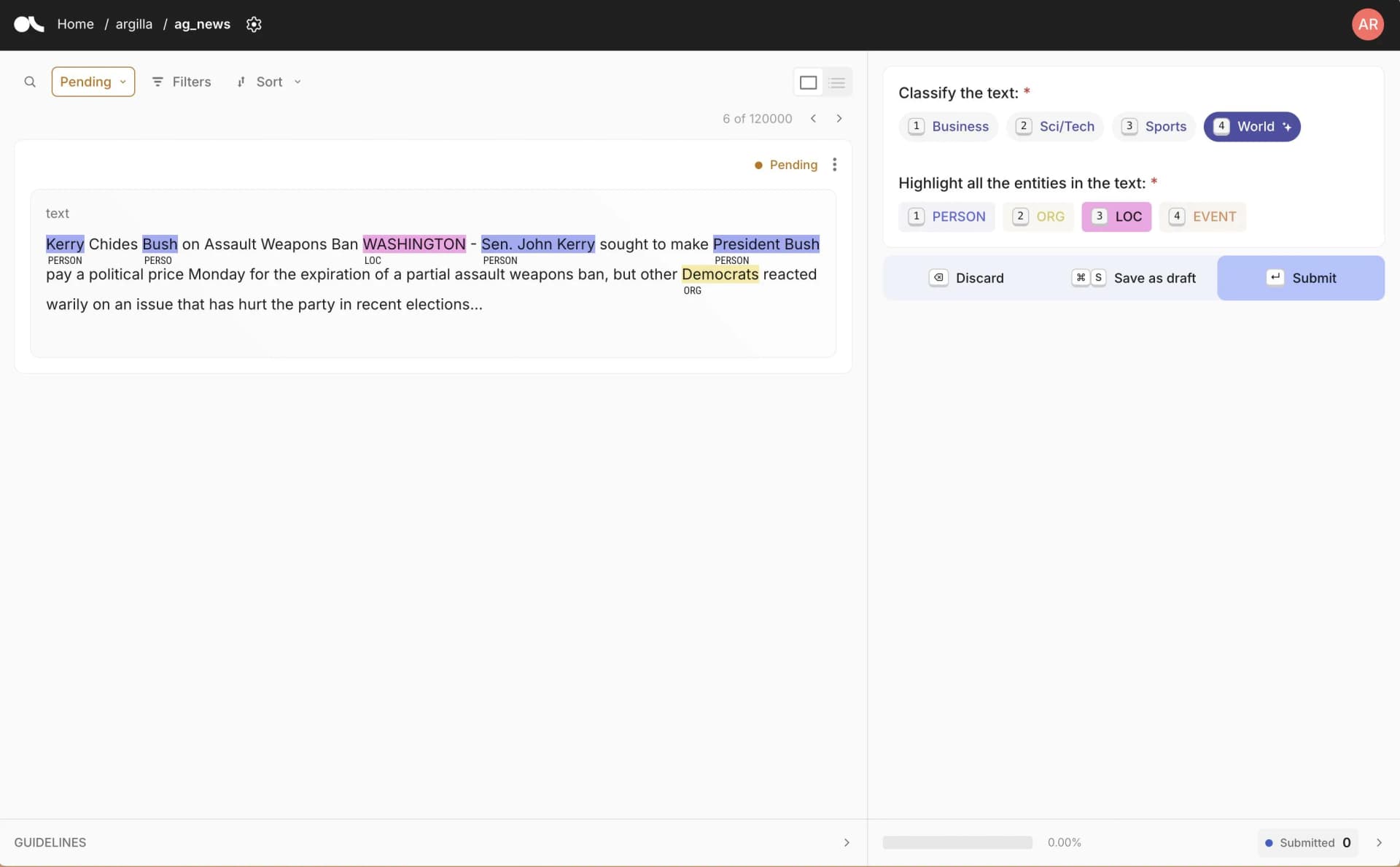
Natural Language Intelligence
Structured Text Training Data
Help AI Understand What People Mean
Human language is messy. The same idea can be expressed in thousands of different ways, while the meaning of a sentence can change completely depending on context.
Text annotation gives machine learning models the structured examples they need to recognize entities, understand intent, identify sentiment, classify content, and discover relationships.
Annotexia helps convert unstructured text into carefully labeled datasets designed around your model, business domain, and annotation objectives.
Text Annotation Services
From simple classification to complex entity and relationship labeling, our workflows can be adapted to your NLP and AI requirements.
Named Entity Recognition
Identify and label people, organizations, locations, products, dates, medical terms, financial entities, and other project-specific entities.
Sentiment Analysis
Label customer opinions, reviews, conversations, and feedback by sentiment or project-specific emotional categories.
Intent Classification
Classify customer queries, support requests, chatbot conversations, and user messages according to their intended meaning.
Text Classification
Categorize documents, messages, articles, reviews, and other text into predefined classes for machine learning models.
Entity & Relation Annotation
Identify entities and relationships between them to help NLP models understand connections and contextual meaning.
Document Annotation
Extract and label information from invoices, forms, contracts, reports, receipts, and other business documents.
Built Around Your NLP Project
Text datasets often require more than simply assigning labels. Context, terminology, ambiguity, and edge cases all matter.
Domain-Aware Annotation
Annotation guidelines can be adapted to your business terminology, industry vocabulary, and project-specific requirements.
Consistent Labeling
Structured guidelines and review processes help maintain consistent annotations across large datasets.
Scalable Workflows
Scale annotation capacity according to dataset volume, complexity, language, and project timelines.
Confidential Data
Support confidential workflows for proprietary documents, customer conversations, and business datasets.
Where Text Annotation Powers AI
Structured text datasets help organizations build smarter search, conversational AI, document intelligence, recommendation, and analytics systems.

Natural Language Processing
Create structured datasets for NLP models that need to understand text, entities, intent, sentiment, and relationships.

Generative AI & LLMs
Support language model development with instruction data, classification, preference-related labeling, and evaluation datasets.

Customer Experience
Analyze customer conversations, reviews, support tickets, and feedback using sentiment and intent annotation.

Document AI
Build intelligent document processing systems by labeling fields, entities, tables, and important information.
From Raw Text to Training Data
A structured annotation workflow helps maintain accuracy and consistency across large NLP datasets.
Understand Your Data
We review your dataset, business domain, annotation objectives, taxonomy, language requirements, and model use case.
Define Annotation Guidelines
Clear guidelines establish entity definitions, class boundaries, edge cases, examples, and labeling rules.
Annotator Training
Annotators are trained using project-specific examples and validation exercises before production work begins.
Text Annotation
The trained team labels text according to the approved taxonomy while maintaining consistency across the dataset.
Quality Review
Annotations undergo quality checks to identify incorrect labels, missing entities, inconsistencies, and ambiguous cases.
Validated Delivery
The completed dataset is validated and delivered in the format required by your NLP or machine learning workflow.
Better Language Models Start With Better Data
Language models learn from enormous amounts of text, but high-quality structured datasets can help teams build targeted AI systems for specific domains and applications.
Annotexia can support project-specific text classification, instruction-related labeling, content categorization, evaluation datasets, and other language-data requirements.
Explore Data LabelingLanguage Understanding
Structure text so models can learn meaning, intent, entities, and context.
Entity Extraction
Identify important entities and categories within complex text.
Conversation Data
Label conversations for chatbots, support systems, and conversational AI.
AI Evaluation
Create structured datasets for testing and evaluating language model behavior.
Output Formats for Your ML Workflow
Receive structured text annotations in commonly used formats or according to your custom schema.
Text Annotation Questions
Common questions about NLP and text annotation services.
What is text annotation?+
Text annotation is the process of labeling words, phrases, sentences, documents, or relationships within text so machine learning and NLP models can learn patterns and understand language.
What types of text annotation do you provide?+
Annotexia supports named entity recognition, sentiment analysis, intent classification, text classification, entity and relation annotation, document annotation, keyword extraction, and custom NLP labeling tasks.
Can you annotate industry-specific terminology?+
Yes. Annotation guidelines can be created around project-specific terminology and domain requirements. This is particularly useful for specialized datasets containing technical, financial, legal, healthcare, or business vocabulary.
Do you support LLM and Generative AI projects?+
Yes. Text annotation can support language model and Generative AI workflows through classification, instruction-related datasets, content labeling, evaluation datasets, and other project-specific requirements.
Can you handle multilingual text?+
Multilingual projects can be supported depending on the required languages, annotation complexity, and project scope. Share your language requirements when requesting a quote so the appropriate workflow can be planned.
Which output formats do you support?+
Depending on your project requirements, we can support formats such as JSON, JSONL, CSV, XML, TXT, Label Studio, and custom structures.
Can I test your quality before starting a large project?+
Yes. We can provide a sample annotation so you can evaluate quality, consistency, communication, and turnaround before proceeding with a larger engagement.
Have Text Data?Let's Make It AI-Ready.
Share your dataset, annotation requirements, expected volume, language, and timeline. Our team can help define the right text annotation workflow.
Start with a sample annotation.
Professional Text Annotation Services
Annotexia provides professional text annotation and labeling services for organizations developing Natural Language Processing, Machine Learning, Generative AI, Large Language Models, and document intelligence applications.
Our text annotation capabilities include named entity recognition, sentiment analysis, intent classification, text classification, entity and relation annotation, document annotation, and custom NLP labeling workflows. Each project can be configured around your taxonomy, domain terminology, annotation guidelines, and output requirements.
High-quality text datasets help AI systems understand language more effectively. By combining structured annotation guidelines, trained annotators, quality review, and validated delivery, Annotexia helps organizations transform unstructured text into useful machine learning training data.